Hi Harvey,
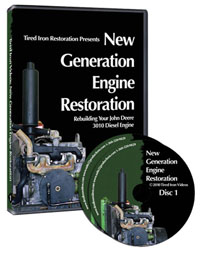
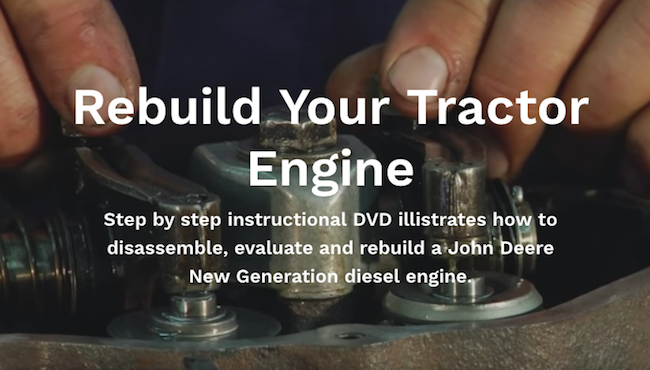
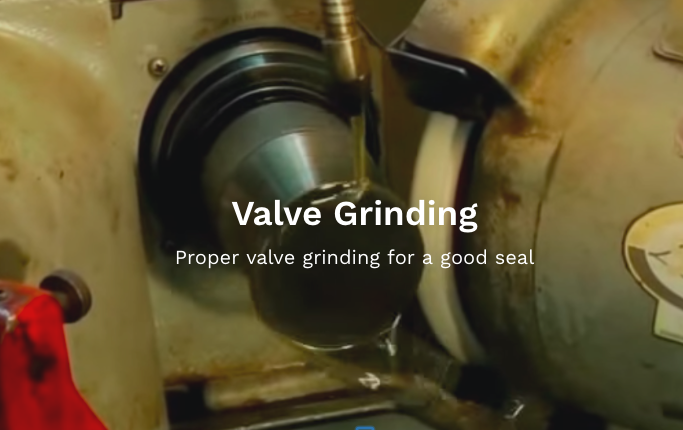
If you are looking to be make yourself a better mechanic, this video is for you. From learning of grinding the values to putting in of valve seats. Machining of parts to Fuel injector theory he has it. I give it 5 thumbs up. This is a must to have video. Thanks, John

Hey Harvey,

Been really enjoying your video, it has been a huge help in doing the overhaul of my 3010. I wound up buying a reman crankshaft from Deere, mine could not be turned again or it would have needed -.04 bearings, which don’t seem to be available. The main bearings they sent with it are -.010′s except for the #3, half of which was a standard and the other half was the wrong part number altogether. I got a -.010 #3 today, put it in the block with the others, set the crank in and checked the clearance with the plasti gauge. The plasti gauge is smushing out way beyond the .002 mark on the paper. The plasti gauge I got goes from .002 to .006 and my result is 50 % beyond the .002. It’s huge, smashed right out flat.

Is there any way I can be doing something wrong that is throwing the result off? I took the crank and the bearings back out, wiped everything down with a solvent, dried, relubed, put it back together and got the same results.

If you could let me know what you think I would really appreciate it.

Andrew

Andrew

This is why I recommend plasti gauging every single bearing. You have identified an oil clearance problem that would have caused damage had you just installed the bearings and started the engine.

Now what you need to do is measure the crank with a micrometer so you know exactly what size you have. Sometimes the cranks are misrepresented as far as the measurements. When you know the size check all the bearing numbers to verify that you have the correct part numbers to fit the crank journal dimensions. I think you’re going to find something doesn’t match up.

A couple other things to check:
Check with plasti gauge on a dry bearing and journal…lubricate on final assembly
Make sure you have the correct torque spec for the main and rod caps

Let me know what you find. Im interested to know what the problem is
Good Luck

Harvey

Hey Harvey,

I had a set of standard bearings that came with the engine kit so I tried taking the crank and the -.010 bearings out and put the standards in. The first thing I noticed was how much easier the crank rolled over when it was just sitting in the top bearing halves. With the -.010s it turned over really stiff. So I went ahead and tried the plasti gauge and sure enough every bearing checked out between .002 and .003. The crank rolled over beautifully with them all torqued down.

I never would have thought it necessary to check that Deere put the right bearings in the box with the crank, so I would have to say that following your video is one of the best investments I’ve ever made. My wife thinks it is pretty funny when I keep trooping in from the shop every little while to check in with you on the next step.

I did double-check with your video that I should lube the top half of the bearing but not the bottom when gauging the clearance when it started coming out wrong. And I double-checked that the torque was 150 ft lbs.

So far I have the mains in, the liners in, rod bearings and caps in(plasti gauged every one) and the cam shaft in. End play on both the cam and the crank came in between .005 and .006.

Lots to do around the farm now so days in the shop are hard to come by but I feel like I’m making good, solid progress. Thanks for your help.

Andrew

Hi Harvey,
Wow your engine video is just wonderful. It is well produced, very
organized, informative and fascinating.
We run a whole fleet of John Deere tractors from the late 1970′s
through mid 1990′s all four and 6 cylinders. We’re now collecting all
the 10 series new generation tractors, – then on to the 20 series. I
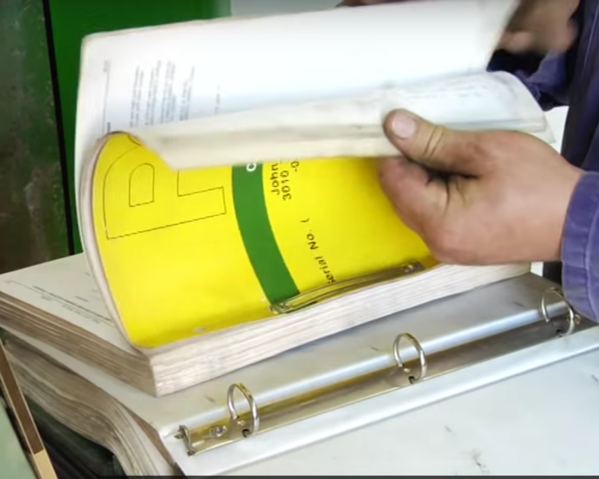
read the manuals, – every word. I’ve done some sleeves over the years
with complete success. The beauty of John Deere is the continuity and
goodness of the basic engineering which allows us to keep using this
wonderful old equipment.
Best regards,
Dave